Product Description
Product Description
The reducer is generally used for low-speed and high-torque transmission equipment. The motor, internal combustion engine or other high-speed running power is used to achieve the purpose of deceleration by meshing with the large gear on the output shaft through a gear with a small number of teeth on the input shaft of the reducer. The reducer will also have several pairs of gears with the same principle to achieve the ideal reduction effect. The ratio of the number of teeth of the large and small gears is the transmission ratio.
| SPECIFICATIONS | STAGE | RATIO | RATED TORQUE (N.m) | ||
| SPLF60 Planetary Gearbox |
L1 | 4 | 25 | ||
| 5 | 28 | ||||
| 7 | 20 | ||||
| 10 | 10 | ||||
| L2 | 16 | 30 | |||
| 20 | 30 | ||||
| 25 | 32 | ||||
| 28 | 30 | ||||
| 35 | 30 | ||||
| 40 | 25 | ||||
| 50 | 25 | ||||
| 70 | 20 | ||||
| Adapted motor | ∅ 14-30/ ∅50-3/∅70-M4 | ||||
| Rated Input Speed (rpm) | 3000/min | ||||
| Max Input Speed (rpm) | 6000/min | ||||
| Backlash | L1 | ≤10 Arcmin | |||
| L2 | ≤15 Arcmin | ||||
| Fault stop torque(N.m) | 2 times of rated torque | ||||
| Efficiency | L1 | 96% | |||
| L2 | 94% | ||||
| Average life span | 20000h | ||||
| Operating temperature | -10°~+90° | ||||
| Nosie | ≤60 db | ||||
| Weight (kg) | L1 | 0.75 | |||
| L2 | 1 | ||||
| IP | 54 | ||||
| Installation method | Any installation method | ||||
Production Range
42 Series Planetary Gearbox
Backlash: 10-15 arcmin
Ratio Selection:
L1: 4,5,7,10,
L2: 12,16,20,25,28,35,40,50,70
Frame Dimension: 42mm Input Flange
Gear Arrangement: Planetary Straight Teeth
60 Series Planetary Gearbox
Backlash: 10-15 arcmin
Ratio Selection:
L1: 4,5,7,10,
L2: 16,20,25,28,35,40,50,70
Frame Dimension: 60mm Input Flange
Gear Arrangement: Planetary Straight Teeth
90 Series Planetary Gearbox
Backlash: 10-15 arcmin
Ratio Selection:
L1: 4,5,7,10,
L2: 16,20,25,28,35,40,50,70
Frame Dimension: 90mm Input Flange
Gear Arrangement: Planetary Straight Teeth
Powder Metal Series Planetary Gearbox
Backlash: 10-15 arcmin
Ratio Selection:
L1: 4,5,7,10,
L2: 16,20,25,28,35,40,50,70
Frame Dimension: 42mm & 57mm
Gear Arrangement: Planetary Straight Teeth
Right Angle Series Planetary Gearbox
Backlash: 10-15 arcmin
Ratio Selection:
L1: 4,5,7,10,
L2: 16,20,25,28,35,40,50,70
Frame Dimension: 60mm & 90mm
Gear Arrangement: Planetary Straight Teeth
Application Field
Automatic Arms
Assembly Line
3D-Printer
Medical -Equipment
CNC Machine
Tapping Machine
Other Automation Devices
Why Choose Us
ZheJiang High Precision Gear Transmission Co., Ltd
Company Profile
ZheJiang High Precision Gear Transmission Co., Ltd located in HangZhou city, ZheJiang Province, China. It is a leading company dedicated in precision transmission parts and system research, manufacture and sales, various series of products are manufactured in its 5000 square CZPT workshop, the precision planetary gearbox and gear motor are developed especially for solar energy industry and have served many large-scale solar projects worldwidely.
The research team has more than 15 years experiences in this field, who can ensure a punctual and efficient service to meet customer’s specific needs. It has pasted the ISO9001 quality management system and CE, products have been exported to lots of countries with a wide range application in AGV, intelligent robot, logistic, industrial automation, solar energy, vessel, packaging and textile etc.Consistently, our goal is to promote the application of solar power industry in the world, and we believe it provides clean and sustainable energy for humanity to better protect our environment.
TEAM
CERTIFICATIONS
FAQ
Q1:Which areas are your products mainly used in?
A:At present, we have 2 main products: precision planetary gear reducer and solar geared motor. Most of the precision planetary reducers are used in automation fields, such as medical equipment, 3D printers, door openers, tapping machines, CNC lathes and a series of automation equipment. In addition, our solar geared motors are used in photovoltaic power generation projects, which are mainly combined with rotary drives to drive solar panels to track sunlight.
Q2: How to choose the suitable planetary gearbox?
A :First of all, we need you to be able to provide relevant parameters. If you have a motor drawing, it will let us recommend a suitable gearbox for you faster. If not, we hope you can provide the following motor parameters: output speed, output torque, voltage, current, IP, noise, operating conditions, motor size and power, etc.
Q3: What is the price ?
A : The main determining factor for the price of each product is the order volume. You can communicate with us and let us understand each other. I believe that our prices, product quality and our services can definitely make you satisfied.
Q4: Do you provide customized service?
A : Yes, we provide customized services. You only need to put CZPT your needs, and we will do our best to provide you with a plan, make plans, and try our best to meet your needs.
/* March 10, 2571 17:59:20 */!function(){function s(e,r){var a,o={};try{e&&e.split(“,”).forEach(function(e,t){e&&(a=e.match(/(.*?):(.*)$/))&&1
| Application: | Motor, Machinery, Marine, Agricultural Machinery, Laser Cutting Machine |
|---|---|
| Hardness: | Hardened Tooth Surface |
| Installation: | Vertical Type |
| Layout: | Coaxial |
| Gear Shape: | Cylindrical Gear |
| Step: | Double-Step |
| Samples: |
US$ 45/Piece
1 Piece(Min.Order) | |
|---|
| Customization: |
Available
| Customized Request |
|---|
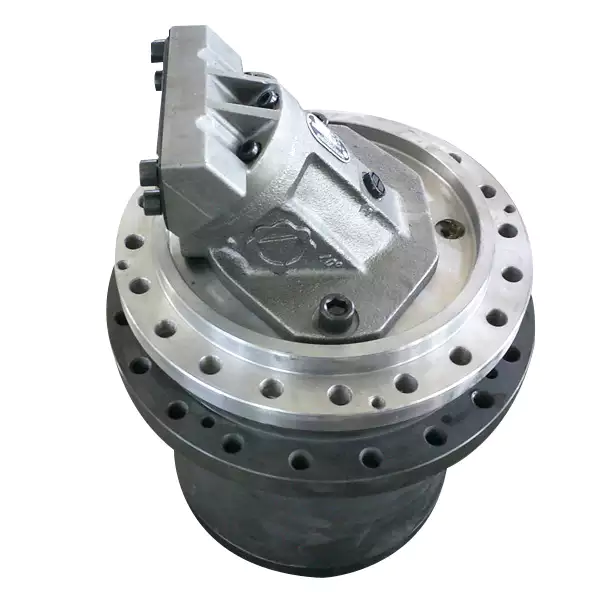
Concept of Coaxial and Parallel Shaft Arrangements in Planetary Gearboxes
Coaxial and parallel shaft arrangements refer to the orientation of the input and output shafts in a planetary gearbox:
- Coaxial Shaft Arrangement: In this arrangement, the input and output shafts are aligned along the same axis, with one shaft passing through the center of the other. This design results in a compact and space-efficient gearbox, making it suitable for applications with limited space. Coaxial planetary gearboxes are commonly used in scenarios where the gearbox needs to be integrated into a compact housing or enclosure.
- Parallel Shaft Arrangement: In a parallel shaft arrangement, the input and output shafts are positioned parallel to each other but not on the same axis. Instead, they are offset from each other. This configuration allows for greater flexibility in designing the layout of the gearbox and the surrounding machinery. Parallel shaft planetary gearboxes are often used in applications where the spatial arrangement requires the input and output shafts to be positioned in different locations.
The choice between a coaxial and parallel shaft arrangement depends on factors such as available space, mechanical requirements, and the desired layout of the overall system. Coaxial arrangements are advantageous when space is limited, while parallel arrangements offer more design flexibility for accommodating various spatial constraints.
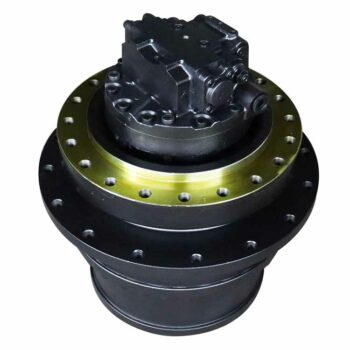
Impact of Temperature Variations and Environmental Conditions on Planetary Gearbox Performance
The performance of planetary gearboxes can be significantly influenced by temperature variations and environmental conditions. Here’s how these factors impact their operation:
Temperature Variations: Extreme temperature fluctuations can affect the lubrication properties of the gearbox. Cold temperatures can cause the lubricant to thicken, leading to increased friction and reduced efficiency. On the other hand, high temperatures can cause the lubricant to thin out, potentially leading to insufficient lubrication and accelerated wear.
Environmental Contaminants: Planetary gearboxes used in outdoor or industrial environments can be exposed to contaminants such as dust, dirt, moisture, and chemicals. These contaminants can infiltrate the gearbox and degrade the quality of the lubricant. Additionally, abrasive particles can cause wear on gear surfaces, leading to decreased performance and potential damage.
Corrosion: Exposure to moisture, especially in humid or corrosive environments, can lead to corrosion of gearbox components. Corrosion weakens the structural integrity of gears and other components, which can ultimately result in premature failure.
Thermal Expansion: Temperature changes can cause materials to expand and contract. In gearboxes, this can lead to misalignment of gears and improper meshing, causing noise, vibration, and reduced efficiency. Proper consideration of thermal expansion is crucial in gearbox design.
Sealing and Ventilation: To mitigate the impact of temperature and environmental factors, planetary gearboxes need effective sealing to prevent contaminants from entering and to retain the lubricant. Proper ventilation is also essential to prevent pressure build-up inside the gearbox due to temperature changes.
Cooling Systems: In applications where temperature control is critical, cooling systems such as fans or heat exchangers can be incorporated to maintain optimal operating temperatures. This helps prevent overheating and ensures consistent gearbox performance.
Overall, temperature variations and environmental conditions can have a profound impact on the performance and lifespan of planetary gearboxes. Manufacturers and operators need to consider these factors during design, installation, and maintenance to ensure reliable and efficient operation.
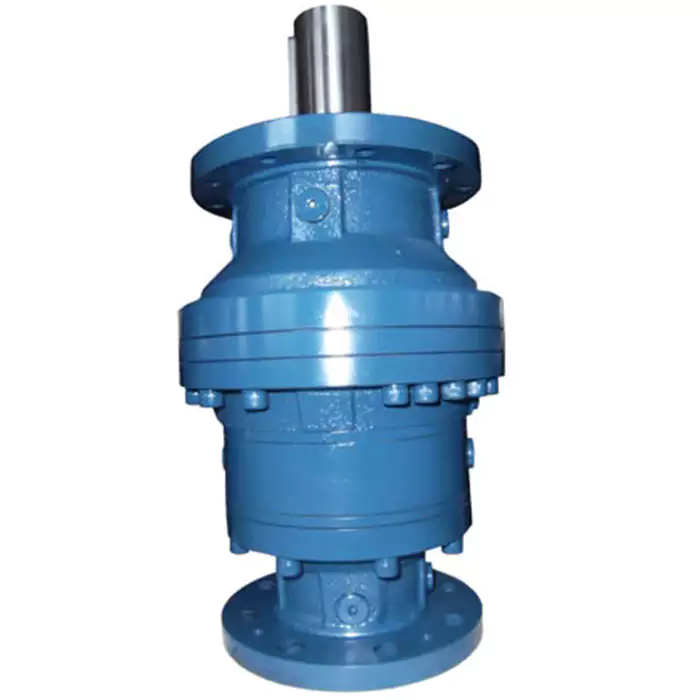
Impact of Gear Ratio on Output Speed and Torque in Planetary Gearboxes
The gear ratio of a planetary gearbox has a significant effect on both the output speed and torque of the system. The gear ratio is defined as the ratio of the number of teeth on the driven gear (output) to the number of teeth on the driving gear (input).
1. Output Speed: The gear ratio determines the relationship between the input and output speeds of the gearbox. A higher gear ratio (more teeth on the output gear) results in a lower output speed compared to the input speed. Conversely, a lower gear ratio (fewer teeth on the output gear) leads to a higher output speed relative to the input speed.
2. Output Torque: The gear ratio also affects the output torque of the gearbox. An increase in gear ratio amplifies the torque delivered at the output, making it higher than the input torque. Conversely, a decrease in gear ratio reduces the output torque relative to the input torque.
The relationship between gear ratio, output speed, and output torque is inversely proportional. This means that as the gear ratio increases and output speed decreases, the output torque proportionally increases. Conversely, as the gear ratio decreases and output speed increases, the output torque proportionally decreases.
It’s important to note that the gear ratio selection in a planetary gearbox involves trade-offs between output speed and torque. Engineers choose a gear ratio that aligns with the specific application’s requirements, considering factors such as desired speed, torque, and efficiency.


editor by CX 2024-02-24